Share on Facebook
 Share on X
 Share by Email
 Share on Google Classroom
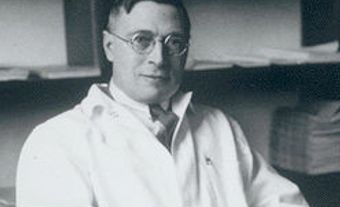
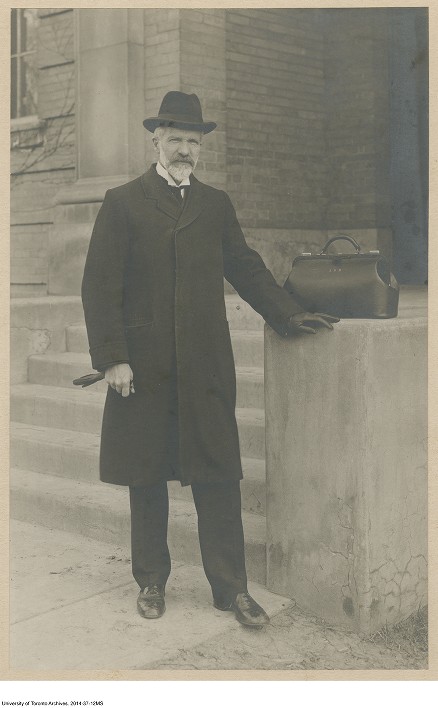
Archibald Byron Macallum, FRS, FRSC, biochemist, physiologist, educator (born 7 April 1858 in Belmont, Canada West; died 5 April 1934 in London, ON). Macallum was a pioneer of medical and biological research and teaching in Canada, best remembered for his contributions to the Faculty of Medicine of the University of Toronto and to the early years of the National Research Council (NRC).
Career
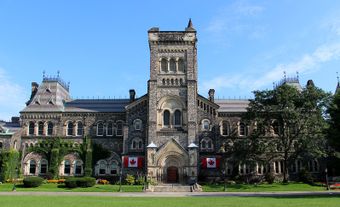
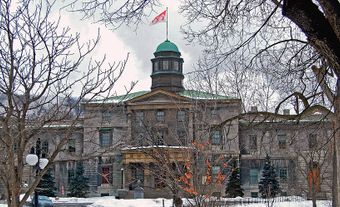
Born on a farm, Archibald Byron Macallum taught school before going to the University of Toronto to graduate in natural sciences in 1880. With Professor Robert Ramsay Wright, he carried out research while teaching high school, returning to the University of Toronto in 1883 to lecture in biology and work toward both a doctorate (Johns Hopkins University, 1888) and a medical degree (University of Toronto, 1889). As professor of physiology (1890-1908) and of the new science of biochemistry (1908-16), he included among his students Maud L. Menten and James Bertram Collip. In 1917 he became the first chairman of the wartime Advisory Council on Scientific and Industrial Research (later the NRC), and in 1920 went to McGill University as professor of biochemistry, retiring in 1928 after a distinguished scientific career.
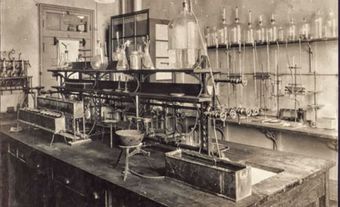
Macallum's early research was on the microchemical distribution of inorganic ions (especially iron and potassium) within cells. Later, as an active member of the Biological Board of Canada (Fisheries Research Board), he carried out fieldwork at its marine stations, and developed his theory that the body fluids of animals represent living "fossil" evidence of the ancient ocean environments in which they had evolved.
Honours and Awards
Archibald Byron Macallum was elected a Fellow of the Royal Society of Canada in 1901 and the Royal Society in 1906. The Government of Canada designated him a national historic person in 1938.