Share on Facebook
 Share on X
 Share by Email
 Share on Google Classroom
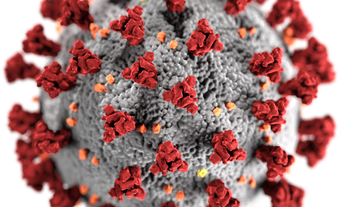
COVID-19 has a negative effect on respiration. Respiration means breathing. COVID-19 is a new type of coronavirus, SARS-CoV-2. It appeared in 2019. In approximately three years about 759 million people around the world had COVID-19. In Canada, about 4.6 million people had COVID-19. Around 51,720 died in Canada. The COVID-19 pandemic is one of the most dangerous pandemics in world history.
This article is a plain-language summary of COVID-19 Pandemic in Canada. If you are interested in reading about this topic in more depth, please see our full-length entry, COVID-19 Pandemic in Canada.

Where Did It Come From?
No one knows for sure where the virus came from. The first human cases appeared in Wuhan, China, in December 2019. Some people think COVID-19 started in animals and then people caught it from animals at a market. Others believe that the virus was created in a lab in China and that researchers working there became infected. Then they spread it to other humans.
The Spread of COVID-19
COVID-19 spread from Wuhan to other places in China quickly. The first person died of COVID-19 on 11 January 2020. Soon after, the Chinese government ordered Wuhan to lock down. They thought the lockdown could stop the spread of COVID-19. By the end of January COVID-19 had spread to Italy. Canada had its first case on 25 January. Five days later the World Health Organization (WHO) said that COVID-19 was an extremely serious threat throughout the world. On 11 March 2020, the WHO stated that the world was experiencing a pandemic. A pandemic is a serious disease or infection that spreads quickly internationally.
How Does COVID-19 Spread?
COVID-19 is spread by droplets when people are breathing and aerosols when people cough, talk or sing. The virus cannot survive on surfaces for very long.

Preventing the Spread of COVID-19
To stop the spread of COVID-19, people were told to keep apart from each other (about two metres) and wear masks. By March 2020, countries then started to lock down. China was the first country to lock down. Italy was the first Western country to lock down in March. Following this, sporting events all over the world were cancelled. In fact, all mass gatherings were cancelled. People everywhere were told that to stop the spread they would have to keep apart from one another. This is called social distancing. Schools were closed. Non-essential businesses were closed and borders were closed. By late April more than half of the people on the planet were experiencing lockdown conditions.

COVID-19 in Canada
Canada was no different from most other places in the world. The most famous Canadian to get COVID-19 at this time was Sophie Grégoire Trudeau, Prime Minister Justin Trudeau’s wife. By late April 2020, 42,110 people in Canada had COVID-19. About 2,147 people died of COVID-19.
Pandemic Waves and Variants
From March 2020 until July 2022 Canada experienced seven different pandemic waves. The different waves peaked (get higher) and then declined (become smaller). There have also been many different variants (or types) of COVID-19 viruses since the first one hit Canada. Some of the different names given to these variants are “Alpha”, “Beta”, “Gamma”, “Delta” and “Omicron.”
Responses and Vaccines
A large number of Canadians were negatively affected by COVID-19. Many got sick, and many died. Others lost their jobs. To help those people who lost their jobs, the government of Canada provided financial assistance. The government also helped to vaccinate Canadians against COVID-19. This contributed greatly to lowering the number of people who got infected. By March 2023, over 83.4 per cent of Canadians had received at least one dose of vaccine. (See also COVID-19 Vaccines.)
Significance
COVID-19 had a drastic effect on the health, economy and social life of Canadians. It also changed the world. It will probably take a long time before Canada and the world can fully recover.